A japanese culinary tradition

what is umeboshi

Tart. Salty. Savory. Distinctly japanese.

Umeboshi is a traditional Japanese preserved ume known for its bold combination of tartness, saltiness, and fruit.

Traditionally enjoyed with rice, umeboshi has a remarkable ability to transform simple foods, and today, it's finding its way into kitchens far beyond Japan.

Discover the flavor, history, and craft behind one of Japan's most distinctive foods.
What is Umeboshi?

Umeboshi are Japanese preserved ume, a small stone fruit traditionally prepared with salt and then dried.

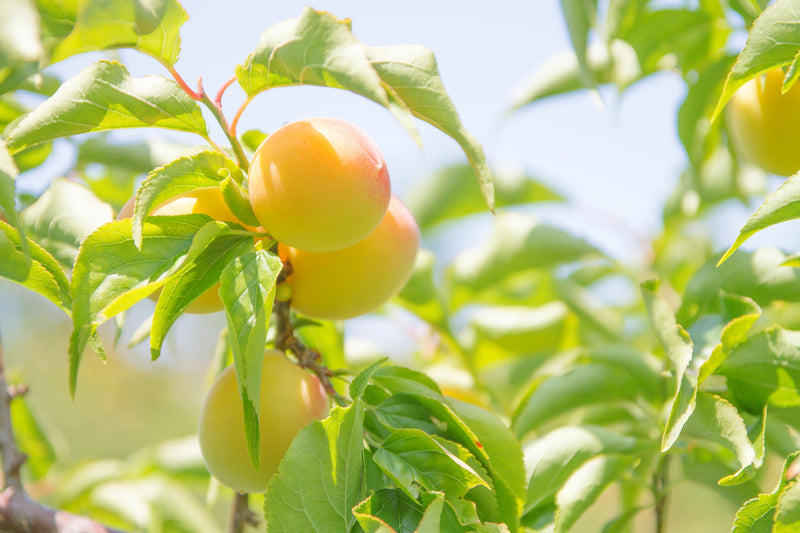
Ume is often translated as “Japanese plum,” but it is not quite the same fruit as the sweet plums commonly found in American grocery stores. Botanically, ume is closer to an apricot, with a firm texture and naturally tart flavor.

When ume are preserved and dried, they become umeboshi, a concentrated expression of the fruit with the characteristic salty, sour flavor that has made it a staple of Japanese cuisine for centuries.

The result is something unlike most Western pickles or preserves: fruity, intensely tart, savory, and deeply aromatic all at once.

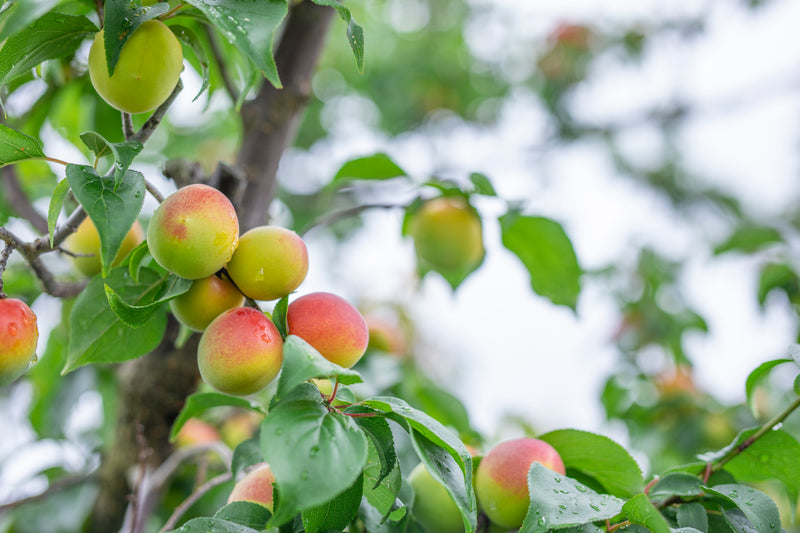
Ripening ume fruit.
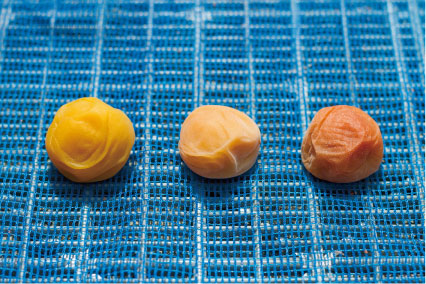
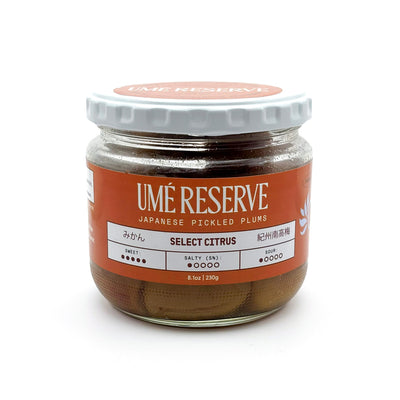
Mikan-flavored umeboshi.

What Does Umeboshi Taste Like?

Traditional umeboshi can be intensely sour and salty, especially when eaten on its own. But umeboshi comes in many styles, and the flavor can range from boldly savory to surprisingly gentle and fruit-forward.

Tart

 A bright, mouthwatering sourness.

Salty

A savory, briny character from traditional preservation.

Fruity

The distinctive flavor of ripe ume beneath the salt and acidity.

Savory

 A concentrated depth that makes umeboshi especially good with simple foods.

And that's part of the fun.

Umeboshi isn't meant to taste like a conventional sweet plum.

It's an ingredient with personality.

A little can wake up a bowl of rice. It can cut through the richness of cheese. It can brighten a sauce, glaze a piece of fish, or turn sparkling water into something entirely unexpected.

Why Is Umeboshi So Popular in Japan?

Umeboshi has been part of Japanese food culture for centuries.

Traditionally, you'll find it alongside rice, tucked into an onigiri, or served as part of a bento. Its intense flavor makes it a natural complement to simple foods, while its preserved nature made it especially practical as a traditional pantry food.

But umeboshi isn't defined by one dish.

It's valued for something simpler:

a little umeboshi can make familiar food more interesting.

That versatility is one reason this centuries-old ingredient still has a place at the modern Japanese table.

How Is Umeboshi Made?

Traditional umeboshi begins with the fruit itself.

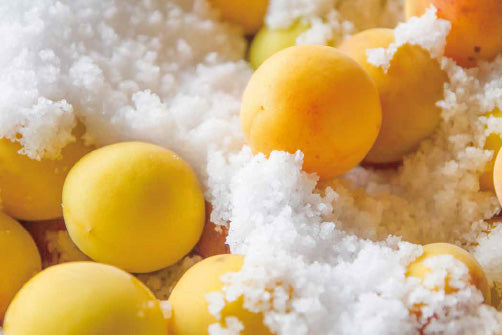
Ume are harvested, preserved with salt, and allowed to cure before being dried—traditionally beneath the summer sun. Depending on the style, the dried ume can then be seasoned with ingredients such as red shiso or other flavoring liquids.

The process transforms fresh, tart fruit into something concentrated, complex, and remarkably shelf-stable.

Ripened fruit falls to the ground
It's salted within 24 hours
Ume → Salt → Time → Sun → Umeboshi
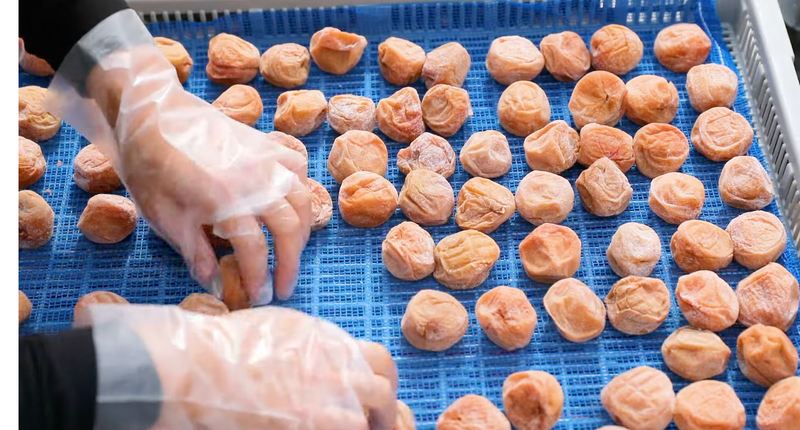
Sun drying
Turning by hand
Adding flavor
Ready to eat

But the process starts long before the jar.

The quality of umeboshi depends on the fruit, where it is grown, how it is cultivated, when it is harvested, and how carefully it is handled throughout the process.

That's why we care so much about where our ume come from.

Where Does The Umé Reserve's Ume Come From?

Where the Mountains Meet the Sea

Our ume are cultivated in Ishigami, Wakayama, Japan, a mountainous region in southern Wakayama known for its long history of ume cultivation.

Here, mountains meet the Pacific coast, creating a distinctive agricultural landscape shaped by sunlight, rainfall, sea air, steep slopes, and generations of farming knowledge.

The unique mountainous terroir and orchards of Wakayama

The Umé Reserve partners with Hamada Farms, located in Ishigami, to source the ume used in our products. The farm is part of the Minabe-Tanabe Ume System, recognized by the United Nations FAO as a Globally Important Agricultural Heritage System.

This is more than a place name on a label.

It is part of the character of the food.

How Do You Eat Umeboshi?

Start simple. Then get creative.

Umeboshi has a bold personality: tart, salty, fruity and savory all at once. You don't need to know Japanese cooking to enjoy it.

In Japan, umeboshi is traditionally enjoyed with rice, tucked into onigiri, or served as part of a bento. But its bright acidity and concentrated flavor make it surprisingly versatile beyond the Japanese table.

Think of umeboshi less like something you eat by the handful and more like a flavor accent: a little can bring brightness, contrast and depth to an entire dish.

1. Start with Rice

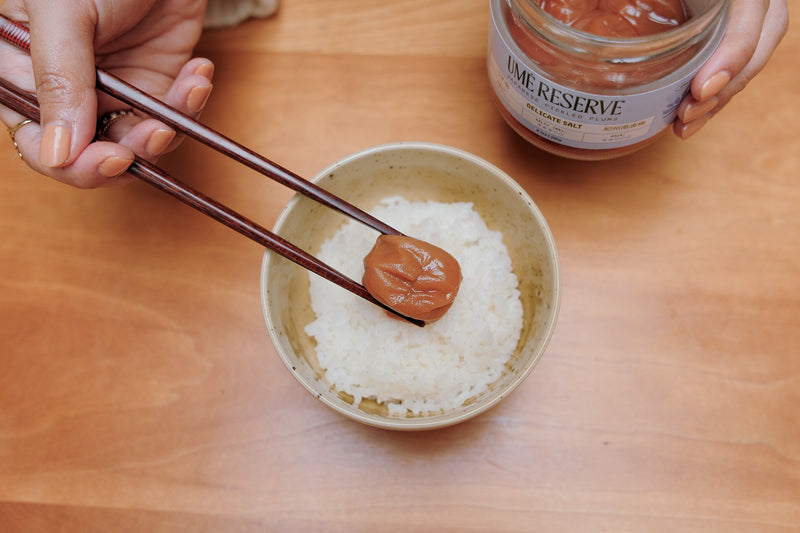
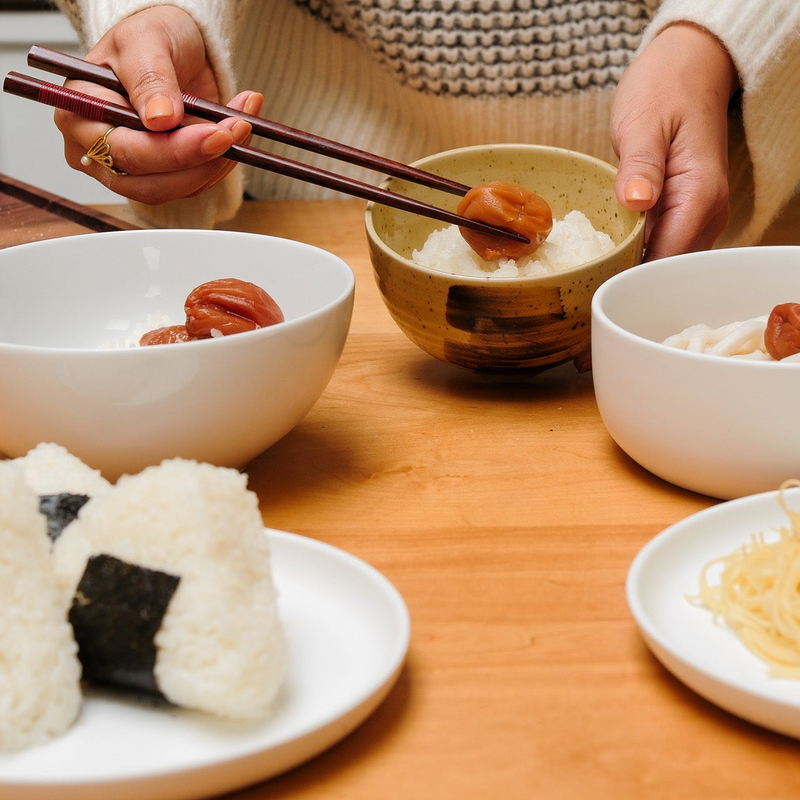
Place an umeboshi over a bowl of warm rice and enjoy the two together, bite by bite.

The mild sweetness of the rice balances the intense tartness and salt of the umeboshi, making this one of the simplest - and most distinctly Japanese - ways to enjoy it.

Or tuck a pitted umeboshi into the center of an onigiri, the beloved Japanese rice ball. Umeboshi is one of the classic fillings for onigiri, and finely chopped umeboshi can also be mixed directly into the rice.

Try it with:
Warm white rice · Onigiri · Ochazuke · Rice porridge

Start here: Signature Shiso

2. Pair It With Something Rich

Umeboshi loves contrast.

Its sharp acidity can cut through richness in much the same way a squeeze of lemon, a pickle or a bright chutney can—but with a distinctly Japanese character.

Try a small amount alongside:

Cheese — especially creamy or soft cheeses
Roasted vegetables — potatoes, squash or carrots
Avocado — mashed into toast or paired with rice
Fish & seafood — as a bright counterpoint to richer preparations
Charcuterie — where its acidity can balance cured meats

For a cheese board, try spreading a little umeboshi paste alongside a creamy cheese. The combination of richness, salt and acidity is unexpectedly addictive.

Try it with:
Cheese · Charcuterie · Roasted vegetables · Seafood

Start here: Select Citrus Umeboshi

3. Cook With It

Umeboshi can do more than sit on the side of the plate.

Remove the pit and mash the flesh into a paste, then use it anywhere you'd reach for an acidic, salty ingredient.

Whisk it into a salad dressing.
Blend it into a sauce or marinade.
Toss it with cold noodles.
Stir a little into roasted vegetables.
Use it to add brightness to fish, chicken or pork.

Because umeboshi brings acidity and seasoning together, a small amount can transform a dish without adding another layer of ingredients.

This is where umeboshi paste becomes especially useful: no pit, no chopping, just scoop, stir and taste.

Try it in:
Dressings · Sauces · Marinades · Noodles · Vegetables · Fish & meat

Start here: Delicate Salt Paste

4. Go Beyond the Japanese Table

Once you know the flavor, the possibilities open up.

Umeboshi's tartness makes it a natural fit for foods and drinks that benefit from a little brightness.

Try a small amount in:

Sparkling water — for a tart, refreshing drink
Cocktails — as an unexpected sour-salty note
Avocado toast — instead of lemon and salt
Grain bowls — stirred through rice, quinoa or other grains
Salads — mixed into a vinaigrette
Pasta — for a bright Japanese-inspired twist

The idea isn't to reinvent umeboshi.

It's to discover what happens when a centuries-old Japanese ingredient meets the foods you already love.

Discover a variety of flavors.

The Golden Rule

A little goes a long way.

Umeboshi is concentrated by nature, so start with a small amount and add more to taste.

If you're trying it for the first time, begin with something familiar: warm rice, creamy cheese or a simple salad dressing. Once you discover the balance of tart, salty and savory, you'll start seeing places for umeboshi everywhere.

There is no wrong way to discover it.

Which Umeboshi Should You Try?

Not all umeboshi taste the same.

The Umé Reserve offers several expressions of the fruit, each designed to bring something different to the table.

Golden Honey - Umeboshi (8.1 oz | 230g)

Golden Honey - Umeboshi (8.1 oz | 230g)

$23.00

Shop Now

Gentle • Fruity • Mellow

Japanese honey softens the traditional sharpness of umeboshi, creating a gentler, lightly salted flavor.

A great place to start if you're new to umeboshi.

Select Citrus - Umeboshi (8.1oz | 230g)

Select Citrus - Umeboshi (8.1oz | 230g)

$23.00

Shop Now

Bright • Sweet-Tart • Citrus

A lively expression that pairs naturally with salads, noodles, charcuterie, and other foods that benefit from a bright citrus note.

For people who like a little more adventure.

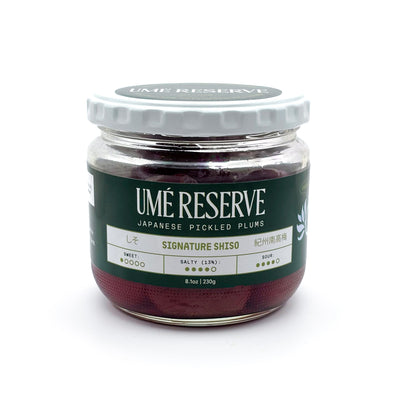
Signature Shiso - Umeboshi (8.1 oz | 230g)

Signature Shiso - Umeboshi (8.1 oz | 230g)

$23.00

Shop Now

Traditional • Aromatic • Savory

A classic-style umeboshi flavored with Kishu red shiso, giving the fruit its characteristic deep color and an aromatic, savory profile.

For the umeboshi traditionalist.

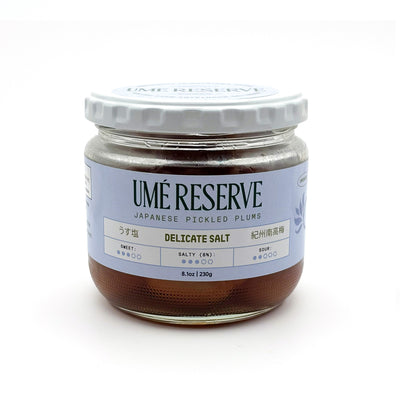
Delicate Salt - Umeboshi (8.1 oz | 230g)

Delicate Salt - Umeboshi (8.1 oz | 230g)

$23.00

Shop Now

Balanced • Savory • Versatile

A more balanced expression designed to work beautifully in cooking, from marinades and sauces to meats and vegetables.

For the cook who wants umeboshi in the kitchen every day.

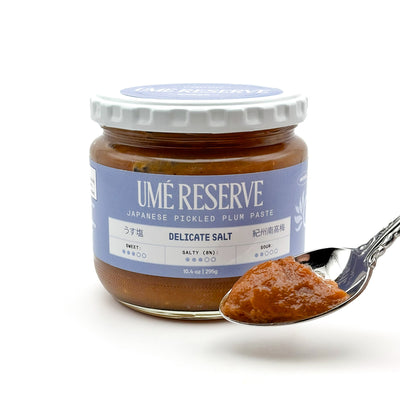
Delicate Salt - Umeboshi Paste (10.4oz | 295g)

Delicate Salt - Umeboshi Paste (10.4oz | 295g)

$19.00

Shop Now

All the flavor. None of the stone.

For sauces, dressings, marinades, cooking, or simply spreading on something delicious, umeboshi paste makes it easy to bring umeboshi into everyday cooking.

Centuries of Tradition Worth Tasting

Umeboshi has survived for generations because it does something remarkably well:

it makes simple food taste better.

A little umeboshi can turn a bowl of plain rice into a meal. It can bring brightness to something rich, depth to something simple, and a distinctly Japanese character to ingredients you already know.

At The Umé Reserve, we're bringing that tradition to a new generation of tables, not by changing what makes umeboshi special, but by making it easier to discover, enjoy, and share.

Where the mountains meet the sea.

 Where centuries of tradition meet today's table.

Health & Nourishment

More Than a Flavor Tradition

Umeboshi has long been associated with traditional Japanese notions of nourishment and well-being.

It's been studied in association with gut health - boosting digestion to assisting with nausea - and beyond, for example helping with hangovers.

it is an intensely flavorful food with a remarkable place in Japanese culinary tradition.

Enjoy it as part of a varied, balanced diet.

Shop around

Umeboshi
Umeboshi

Umeboshi

Umeboshi Paste
Umeboshi Paste

Umeboshi Paste

Umeboshi Products
Umeboshi Products

Umeboshi Products

MInabe-Tanabe Ume system

Discover our UN Recognized Cultivation Process

Our Process